North Dakota Climate: What to Expect Year-Round
North Dakota’s climate is defined by contrast, but in a way that feels consistent once you get used to it. The state moves through all four seasons clearly, without much overlap, so each part of the year has its own rhythm.
One thing that often surprises people is how much sunshine there is. In 2025, cities like Bismarck recorded 201 days of sunshine, outperforming many coastal cities.
It’s also a relatively dry state. Conditions change as you move from east to west, with eastern areas getting around 20 inches of rain annually, while parts of the west may see closer to nine. That difference shapes both the landscape and the overall feel of each region.
Temperatures can shift quite a bit throughout the year, but they follow a pattern that becomes easy to understand over time. And once you do, the climate feels a lot more predictable than most people expect.
Here’s a quick overview of weather in North Dakota throughout the year:
| Season |
Avg. High |
Avg. Low |
Moving Conditions |
Typical Clothing |
| Winter |
19°F |
2°F |
Challenging |
Heavy parka, boots |
| Spring |
52°F |
29°F |
Unpredictable |
Light layers, rain jacket |
| Summer |
82°F |
58°F |
Ideal |
Breathable clothing, hat |
| Fall |
66°F |
38°F |
Most comfortable |
Sweaters, light jacket |
Winter in North Dakota: The Defining Season
What to expect:
- Average January temperatures: ~2°F (north) to ~17°F (southwest)
- Around 50 days below zero each year
- Consistent snowfall
- A lifestyle built around winter conditions
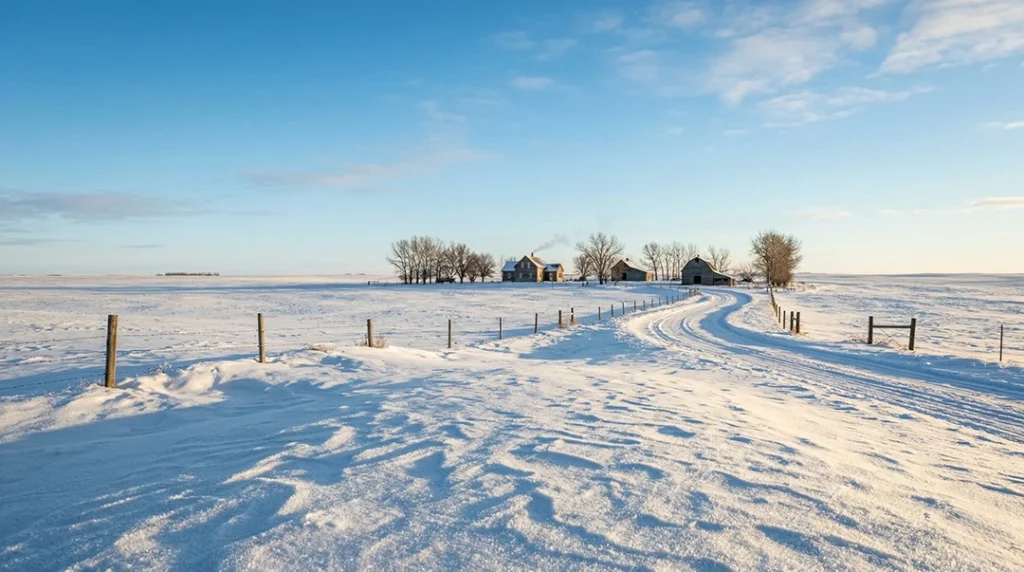
Winter is a big part of life in North Dakota, and it’s usually what people are most curious about. It’s long, dry, and can get very cold, especially in January when temperatures reach their lowest point.
In the northern part of the state, averages sit around 2°F, while the southwest tends to be a bit milder at around 17°F. There are also stretches of time where temperatures drop below zero—something that’s expected rather than unusual. In fact, North Dakota sees around 50 days below zero each year, and historically, temperatures have gone as low as -60°F.
But what makes a difference is how prepared everything is for it. Homes are built with winter in mind, roads are maintained regularly, and daily routines adjust to the season. Because of that, winter feels more structured than extreme once you settle into it.
And for many people, it’s not just about getting through it. Activities like snowmobiling, ice fishing, skating, and skiing are a normal part of the season, and over time, winter becomes something people learn to work with—not against.
Spring in North Dakota: A Season of Rapid Change
What to expect:
- Average temperatures around 52°F
- Quick transition from winter to warmer weather
- Snow melts rapidly (late March to early April)
- Day-to-day conditions can vary
Spring in North Dakota tends to move quickly. After months of winter, the shift usually begins in late March or early April, when snow starts to melt and the landscape begins to change almost all at once.
The ground dries out, fields open up, and you can see the transition happening in real time. With average temperatures around 52°F, the season feels more like a bridge between winter and summer than a steady period on its own.
Because of that, weather can vary from day to day. Some days feel warm and calm, while others still carry a bit of that winter edge. But overall, spring marks a clear turning point—the moment when everything starts moving forward again.
As we move into Spring 2026, the transition has been slightly cooler due to the late-season La Niña influence, making April a prime time for those who enjoy a longer ‘crisp’ season before the summer heat.
Summer in North Dakota: Surprisingly Pleasant
What to expect:
- Average temperatures around 82°F, with occasional heat waves
- Warm days with cool, comfortable nights
- Long daylight hours (sunrise before 6 a.m., sunset after 9:30 p.m.)
- Ideal conditions for outdoor living
Summer in North Dakota is often the part that catches people off guard. Instead of extreme heat, the season brings warm, comfortable days that feel easy to enjoy, especially with cooler evenings that give everything a chance to slow down.
One of the biggest differences is how long the days are. In June, the sun rises early and sets late, which naturally pulls more time outside. Whether it’s spending time on the deck, going for a walk, or just enjoying the extra light, the days tend to feel longer in a good way.
There is some unpredictability to keep in mind. Thunderstorms are part of the season, and the state does see tornado activity and occasional hail. While 2025 saw a higher-than-average 70 recorded tornadoes, most were brief ‘spin-ups’ in rural areas, and the state has advanced early-warning systems. But for most of the summer, conditions stay steady and enjoyable.
It’s the season that balances everything out—and for many, it ends up being one of the most appreciated parts of living here.
Fall in North Dakota: The Best Time to Move
What to expect:
- Average temperatures around 66°F
- Mild days with cooler, crisp nights
- First frost typically around mid-September
- Stable and predictable weather
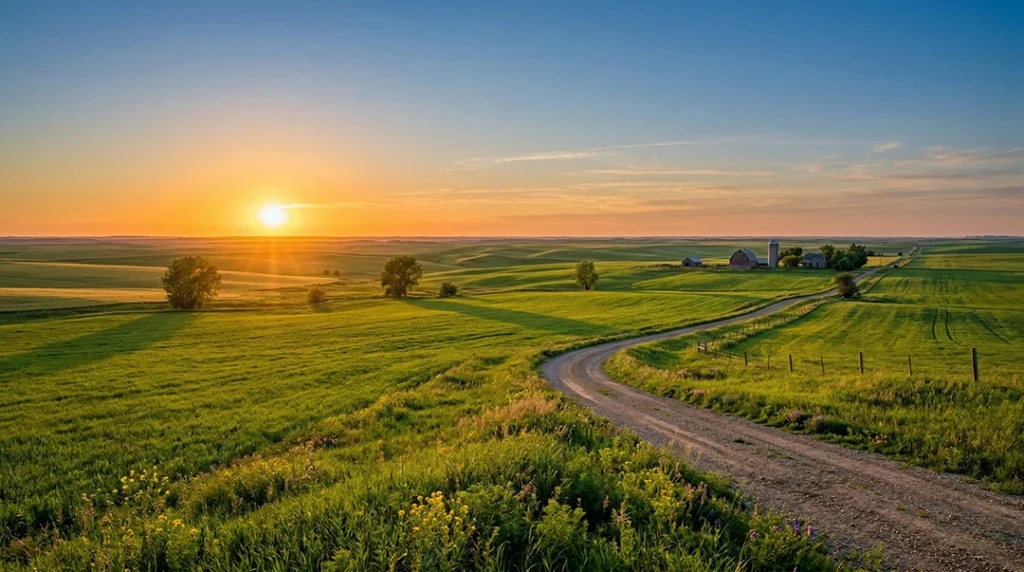
Fall tends to be one of the most comfortable times of year in North Dakota, especially for anyone planning a move. After the heat of summer, temperatures settle into a mild range that feels easy to adjust to.
Days are still warm enough to be outside, while evenings start to cool down, bringing a noticeable shift in the air. The first frost usually arrives around mid-September, marking the beginning of the transition toward winter.
What stands out most during this time is how steady everything feels. Weather patterns are more predictable, precipitation is lighter, and there’s a sense of consistency that makes it easier to get settled.
For many people, this becomes one of the easiest windows to move, get familiar with the area, and ease into the seasonal changes ahead though people relocate successfully throughout the year.
Precipitation and Regional Differences
What to expect:
- Around 20 inches of annual rainfall in the east
- As little as 9 inches in western parts of the state
- Overall dry climate
- Most noticeable rainfall typically in June (3–4 inches)
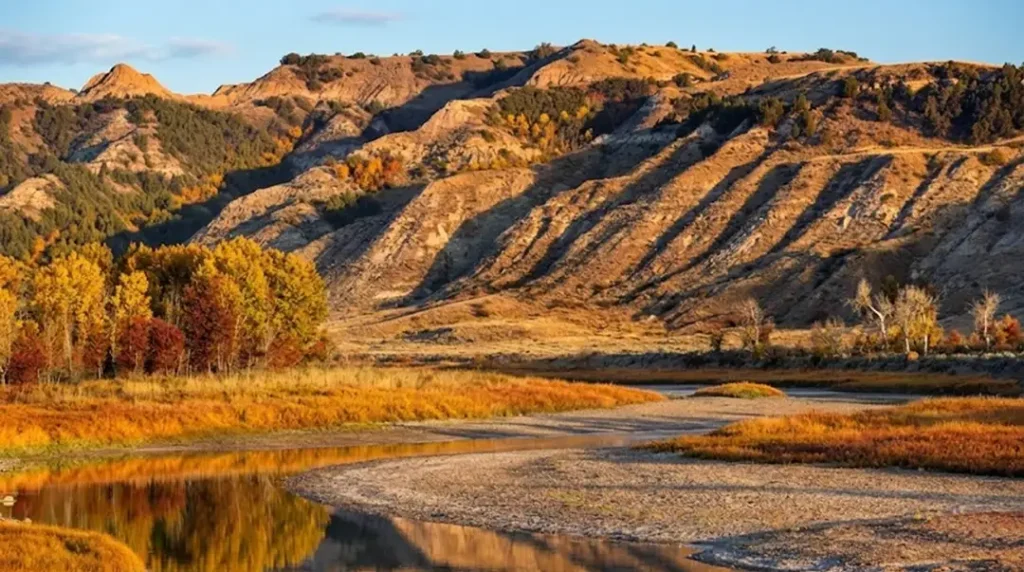
North Dakota is generally considered a dry state, and that becomes more noticeable as you move from east to west. Eastern areas receive around 20 inches of rain each year, while parts of the western badlands may see less than half of that.
Another difference compared to many other states is timing. Instead of steady spring rainfall, North Dakota often sees its most consistent precipitation in June, when totals typically reach around 3 to 4 inches for the month.
This drier climate affects everything from the landscape to day-to-day comfort, creating a more open, less humid environment overall.
Common Misconceptions About North Dakota Weather
“It’s always cold.”
That’s one of the most common assumptions—and it’s not true. North Dakota has four distinct seasons, including warm summers and mild fall conditions that balance out the colder months.
“Winters are too extreme to live with.”
Winters are strong, but they’re also consistent. Because everything is built around those conditions—from homes to infrastructure—they tend to feel more manageable than people expect.
“There isn’t much sunshine.”
In reality, North Dakota sees more than 200 sunny or mostly sunny days each year based on official North Dakota climate data. Even during colder months, there’s often more light than people anticipate.
Once you understand how each season works, the weather starts to feel less overwhelming and a lot more predictable.
When Is the Best Time to Move to North Dakota?
For most people, the easiest time to move to North Dakota is between late summer and early fall.
During this period, the weather is mild, conditions are more stable, and there’s enough time to settle in before winter arrives. It allows for a smoother transition, especially for those who are new to the state and want to get comfortable with their surroundings first.
While late summer and early fall are often the most comfortable times to move, people relocate to North Dakota throughout the year. Each season comes with its own conditions, but with the right preparation, moving at any time of year can be manageable.
That said, timing can also depend on personal preference. Some people prefer arriving during warmer months, while others are comfortable adapting more quickly to colder conditions.
What matters most is understanding what to expect. Once you do, planning your move becomes much more straightforward.
Getting Comfortable with the Seasons
Weather in North Dakota is often seen as something to worry about, but in reality, it’s just something to understand.
Each season brings a different pace, and together they create a climate that feels more structured than extreme. Once you know what to expect, the changes throughout the year start to feel natural, not overwhelming.
For anyone considering a move, the weather isn’t a barrier—it’s simply part of the experience. And over time, it becomes something you learn to plan around, rather than something that holds you back.
Frequently Asked Questions About Weather in North Dakota
Is North Dakota cold all year?
No, North Dakota is not cold year-round. While winters are long and can be very cold, the state also has warm summers, mild fall weather, and a full range of seasonal changes throughout the year.
How cold does it get in North Dakota?
Winter temperatures can drop below zero for extended periods, especially in January. Average temperatures range from around 2°F in the north to about 17°F in the southwest, with extreme lows historically reaching -60°F.
What are summers like in North Dakota?
Summers are generally warm and comfortable, with average temperatures around 82°F. Days are long, with sunrise before 6 a.m. and sunset after 9:30 p.m., and evenings tend to cool down, making the overall climate easy to enjoy.
Does North Dakota get tornadoes?
Yes, North Dakota does experience tornadoes, typically during late spring and summer. However, they are relatively spread out, and the state is well-prepared for severe weather conditions.
Is North Dakota a dry state?
Yes, North Dakota has a relatively dry climate. Eastern areas receive around 20 inches of rain annually, while western regions may see closer to 9 inches. Most noticeable rainfall usually occurs in June.
When is the best time to move to North Dakota?
Late summer through early fall is often the easiest time to move, though people relocate to North Dakota throughout the year depending on their needs and timing. The weather is mild, conditions are stable, and it gives you time to settle in before winter begins.
Whether you move in the middle of winter or during a mild fall, the key is simply knowing what to expect ahead of time.